
Maintenance
Winter car care in Whatcom County: what actually matters
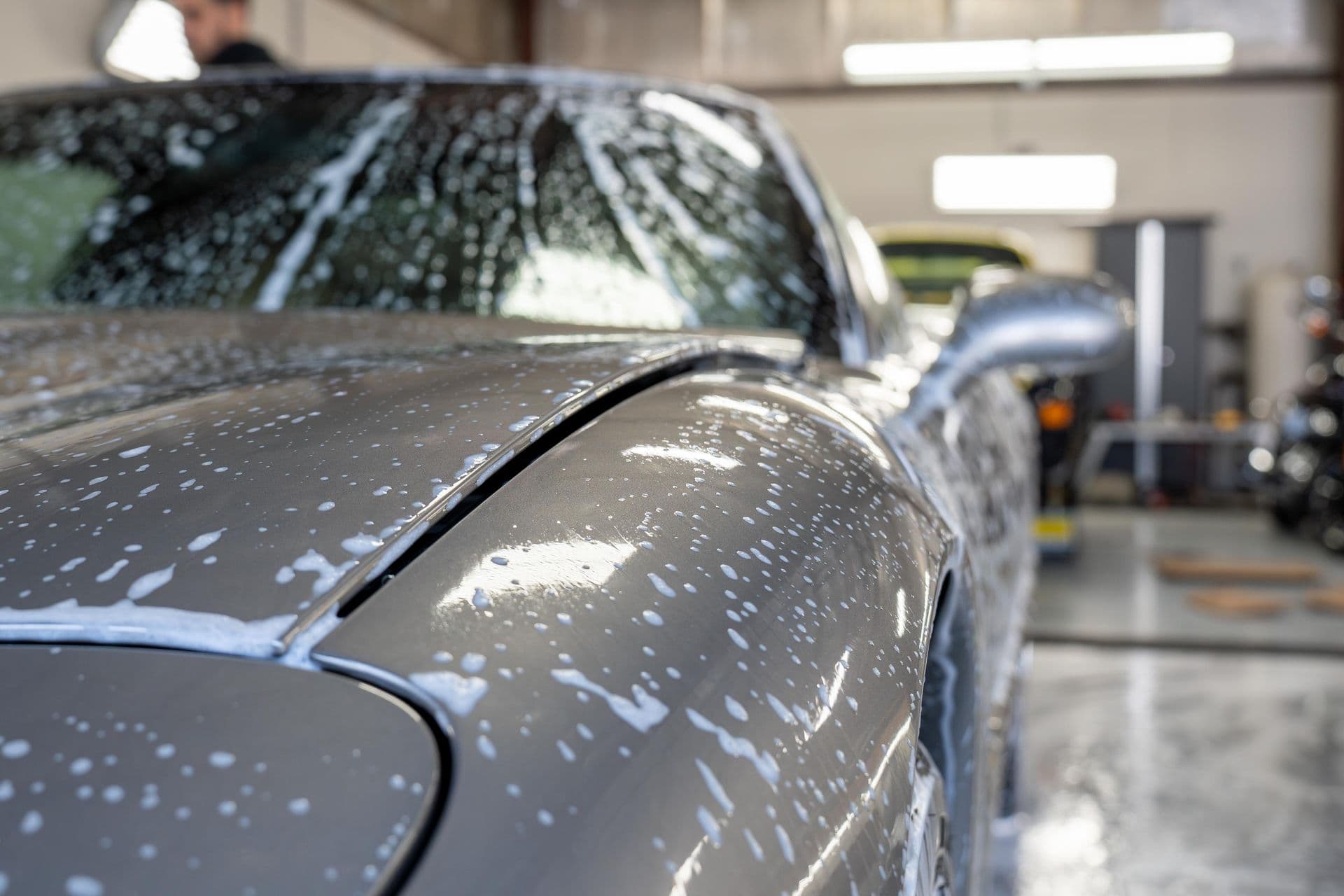
Winter here does not look dangerous. We rarely get the punishing cold that people associate with vehicle damage, and it is easy to assume a mild wet winter is easy on a car. It is not — it is just slower, and the damage is mostly happening where you cannot see it.
The actual threat is brine, not snow
Washington treats highways with anti-icing brine ahead of freezing events, and brine behaves differently from rock salt. It is a liquid, so it gets everywhere — into seams, up into wheel wells, along the underbody, and into every cavity that rock salt would simply fall out of. It also stays wet and chemically active far longer, which in a climate that never really dries out means it keeps working on your vehicle for weeks.
The corrosion this causes starts underneath. By the time you see it at panel edges or around wheel arches, it has been developing out of sight for a long time.
What actually helps
- Wash more often in winter, not less. Every two weeks is a reasonable target, and after any freezing event when the roads have been treated.
- Rinse the underbody. This is the part almost everyone skips and it matters more than washing the paint. Any wash with an underbody rinse is worth the extra dollar.
- Do not neglect door jambs, the fuel filler area and the tailgate seams — brine collects in exactly these places.
- Keep the interior dry. Wet mats nine months a year means moisture in the carpet padding, which becomes the mildew smell everyone gets in February.
- Top up washer fluid with a winter formulation. Road spray on a dark afternoon is a visibility problem before it is a paint problem.
Why coated vehicles come through winter better
A ceramic coating does not stop salt landing on the car. What it changes is whether the salt bonds. On uncoated paint, brine and road film grip into the pores of the clear coat and need physical effort to remove — which in cold, wet, dark conditions is exactly when people cannot be bothered. On a coated car, a rinse genuinely gets most of it off, so the vehicle actually gets cleaned rather than left.
The autumn job worth doing
The single highest-value thing you can do is decontaminate and protect before winter rather than after it. Going into November with a clean, decontaminated, protected surface means the whole season is a maintenance exercise. Going into November with a summer of bonded contamination on the paint means salt sits on top of that all winter.
It is also the quiet season for every shop in the county, which means availability and, frankly, better attention than you will get in the May rush.
What is a waste of money
- A full paint correction in November. Correct in spring when the car is not about to spend four months getting sandblasted with brine.
- Automatic car washes with brushes. They cause more paint damage over a winter than the salt does.
- Wax applied in the cold. It needs surface temperature to bond properly and it will not last the season regardless.